
Soft Skills vs. Hard Skills: Understanding the Difference and Why Both Matter

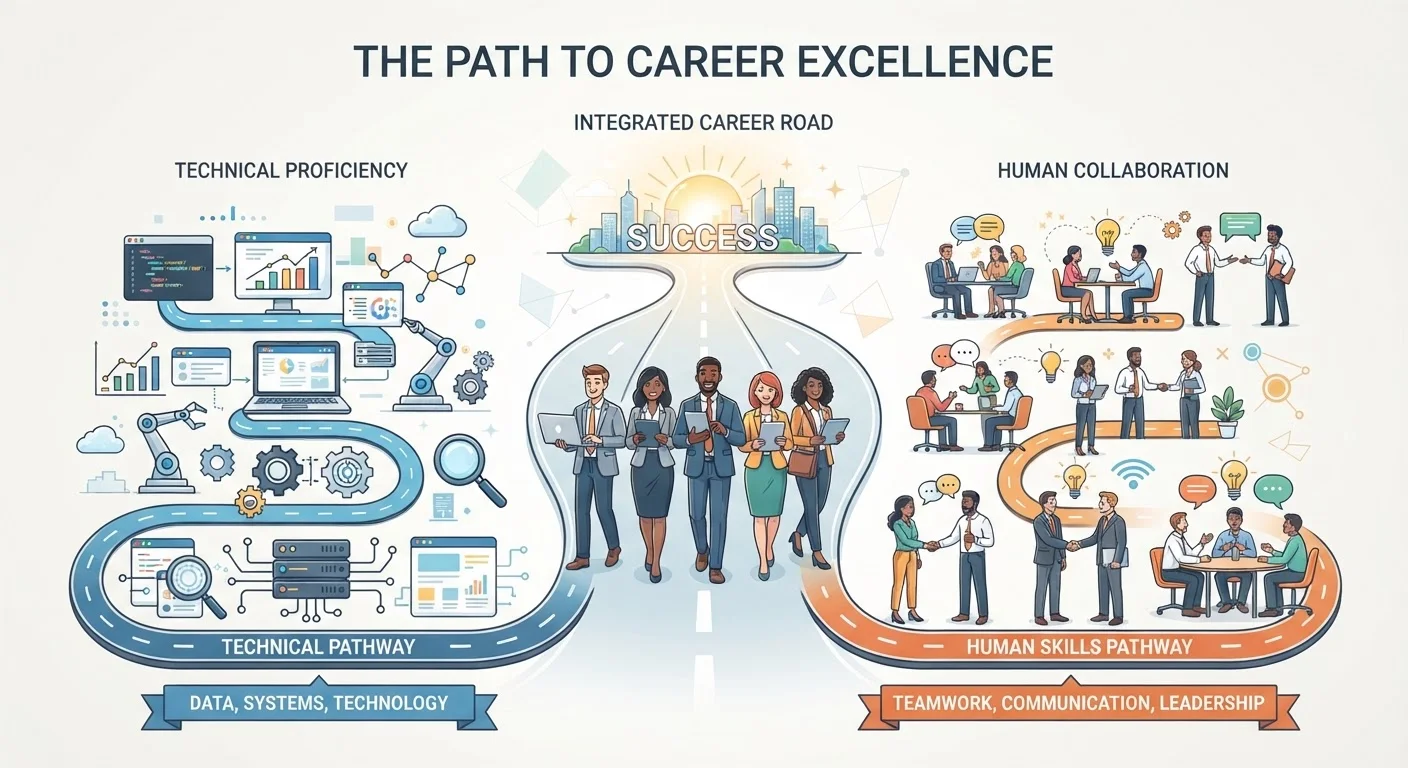
Photo: FaqsBay.com | Trending Blogs, Top Genres editorial
Key Takeaways
- Hard skills are specific, teachable abilities - like coding or data analysis - that can be tested and certified.
- Soft skills are interpersonal and cognitive traits - like communication and adaptability - that shape how you work.
- Employers consistently cite soft skills gaps as a top hiring challenge, even for technical roles.
- Both skill types are learnable; neither is fixed at birth or locked in by personality.
- The strongest candidates combine credible technical credentials with demonstrated interpersonal competence.
Defining Hard Skills and Soft Skills
Hard skills are the specific, teachable capabilities you acquire through formal education, training, or deliberate practice. They are concrete enough to be tested, certified, or demonstrated in a portfolio. Examples include writing SQL queries, reading financial statements, operating CNC machinery, or speaking a second language. An employer can evaluate a hard skill with a clear benchmark: either you can do it or you can't.
Soft skills, by contrast, describe how you work - with colleagues, clients, deadlines, and setbacks. Terms like communication, adaptability, emotional intelligence, and critical thinking fall into this category. These traits are harder to measure on a standardized test, but their impact on performance is well-documented. A data analyst who can't explain findings clearly, or a project manager who shuts down under pressure, illustrates what happens when soft skills are absent.
Importantly, neither category is innate. Both hard and soft skills are developed over time. The idea that you're simply "born" with good communication or that leadership charisma can't be cultivated is not supported by workplace research.
| Criterion | Hard Skills | Soft Skills |
|---|---|---|
| Definition | Specific, teachable technical abilities | Interpersonal and cognitive work traits |
| Examples | Python, CPR certification, financial modeling | Active listening, adaptability, conflict resolution |
| How measured | Tests, certifications, portfolio output | Observation, reviews, peer feedback |
| Role in hiring | Establishes baseline eligibility | Often determines the final decision |
| Development path | Courses, credentials, hands-on practice | Feedback, mentorship, stretch assignments |
| Automation risk | Higher - many technical tasks are automatable | Lower - human interaction is hard to replicate |
| Career longevity | Requires regular updating as tools evolve | Durable across roles, industries, and decades |
How Each Skill Type Shows Up in Hiring and Performance
Most job postings list hard skills prominently - specific software, certifications, degrees, or years of experience in a defined area. These requirements function as a filter: applicants who don't meet the threshold often won't advance past an automated screening. That makes hard skills the price of entry for many roles.
But hiring decisions rarely end there. Recruiters and hiring managers report that soft skills frequently determine who gets the offer when multiple candidates meet the technical requirements. According to surveys conducted by the Society for Human Resource Management (SHRM), a significant majority of HR professionals identify finding applicants with the right soft skills as a consistent challenge - often more difficult than filling technical gaps.
93%
Employers prioritizing soft skills in hiring
A LinkedIn Workplace Learning Report found that 93% of talent professionals say soft skills matter as much as or more than technical skills when making hiring decisions.
89%
Hiring failures linked to soft skill gaps
According to research cited by the Society for Human Resource Management, roughly 89% of hiring failures are attributed to poor attitude or interpersonal fit rather than lack of technical ability.
On the job, this dynamic continues. Performance reviews, promotion decisions, and team cohesion are all shaped by interpersonal competence. A technically skilled employee who struggles with feedback, misses collaborative deadlines, or creates friction on the team carries a hidden cost that managers weigh seriously. Conversely, someone with strong soft skills can often learn the hard skills a role requires - making them a longer-term investment. See our guide to transferable skills for a deeper look at how interpersonal competencies influence hiring decisions.
Developing Both Skill Sets Intentionally
Hard skills have clearer development paths: enroll in a course, earn a certification, complete a project, build a portfolio. Online learning platforms, community colleges, and professional bootcamps all offer structured routes to measurable technical credentials. For guidance on structuring that learning, our practical roadmap to online learning covers how to turn coursework into applicable knowledge.
Soft skills require a different approach. Because they show up in relationships and situations rather than coursework, deliberate practice means seeking feedback, taking on stretch assignments, and reflecting on how you handle real interactions. Joining cross-functional projects, practicing public speaking, or working with a mentor are common development strategies. Some professional development programs now offer structured soft skills training - communication workshops, conflict resolution simulations, and leadership cohorts - that give these capabilities the same rigor typically applied to technical training.
For those navigating a career change, the interplay between both skill types becomes especially relevant. Many professionals find that strong soft skills help them enter a new field even before their hard skills fully match the job description. Skills that cross industry lines explores which capabilities tend to transfer and how to frame them effectively.
The content provided on our blog site traverses numerous categories, offering readers valuable and practical information. Readers can use the editorial team’s research and data to gain more insights into their topics of interest. However, they are requested not to treat the articles as conclusive. The website team cannot be held responsible for differences in data or inaccuracies found across other platforms. Please also note that the site might also miss out on various schemes and offers available that the readers may find more beneficial than the ones we cover.